
The Science Behind Welded Mesh Fencing: Why Precision Welding Defines Security Performance
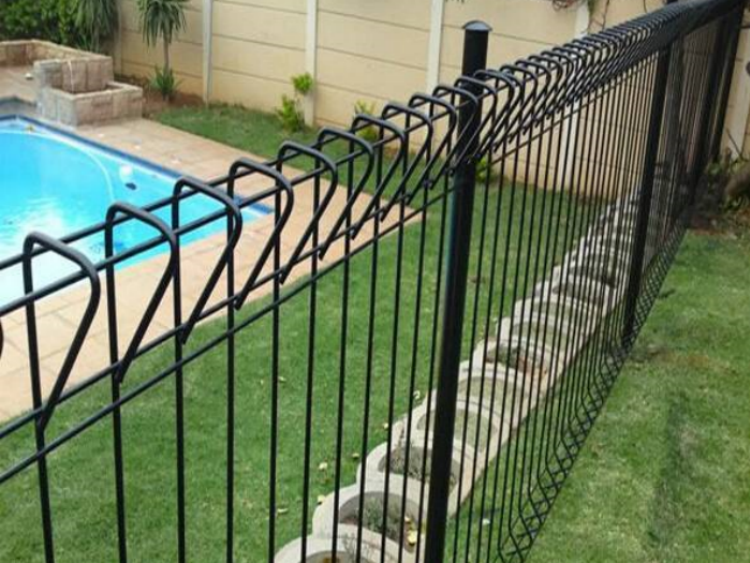
Welded mesh fencing—often referred to as BRC (British Rolled Concrete) fence in many markets—is more than just intersecting wires. Its real strength lies in how those wires are joined. In this post, we take a closer look at the welding process that turns raw steel into a reliable perimeter barrier.
Unlike bolted or woven systems, welded mesh relies on fusion bonding at every intersection. This isn’t just about holding wires together—it’s about creating a unified structural grid that resists bending, cutting, and climbing attempts.
Here’s how it’s done right:
Material Integrity Comes First
High-tensile steel wire is the foundation. Before any welding begins, both longitudinal and cross wires undergo strict quality checks for diameter consistency and tensile strength. Impurities or inconsistencies here can lead to weld failures down the line.
High-tensile steel wire is the foundation. Before any welding begins, both longitudinal and cross wires undergo strict quality checks for diameter consistency and tensile strength. Impurities or inconsistencies here can lead to weld failures down the line.
Surface Readiness Is Non-Negotiable
Even the best weld won’t stick to a dirty surface. Wires are cleaned via mechanical brushing or chemical degreasing to remove oxides, oil, or moisture. Clean metal ensures optimal electrical conductivity during resistance welding—a critical factor for consistent joint formation.
Even the best weld won’t stick to a dirty surface. Wires are cleaned via mechanical brushing or chemical degreasing to remove oxides, oil, or moisture. Clean metal ensures optimal electrical conductivity during resistance welding—a critical factor for consistent joint formation.
Resistance Welding: The Heart of the Process
Most industrial-grade welded mesh uses electric resistance welding (ERW). Here’s how it works:
Most industrial-grade welded mesh uses electric resistance welding (ERW). Here’s how it works:
- Wires are precisely aligned in a grid pattern.
- Electrodes apply pressure while passing a high-current pulse through the contact point.
- The resulting heat fuses the metals instantly—no filler material needed.
- The entire panel is formed in seconds, with each node structurally locked.
This method delivers uniformity, speed, and minimal distortion—key for maintaining flatness across large panels.
Post-Weld Treatment for Longevity
After welding, panels often go through:
- Deburring: To remove sharp edges and ensure safety during handling.
- Hot-dip galvanizing: Immersing the entire panel in molten zinc for corrosion resistance that lasts decades.
- Optional PVC or powder coating: For added color, UV protection, and anti-climb smoothness—especially useful in urban or residential settings.
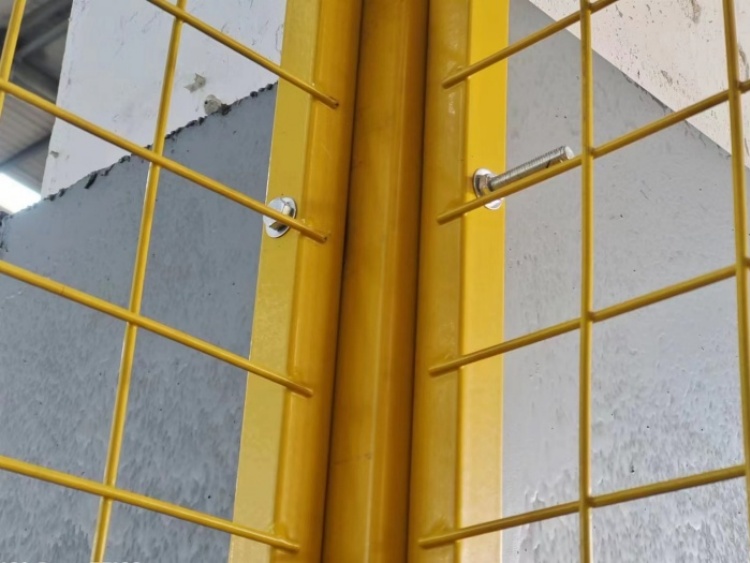
Quality Isn’t Assumed—It’s Verified
Reputable manufacturers test weld shear strength, grid accuracy, and coating thickness. Standards like ISO 1461 (for galvanizing) or ASTM A185 (for welded wire fabric) provide benchmarks. Without these checks, even a visually perfect fence may fail under stress.
Why It Matters in Real Applications
From agricultural enclosures to airport perimeters, the performance of a security fence hinges on weld integrity. A poorly welded joint becomes the weakest link—literally. But when done correctly, welded mesh offers unmatched rigidity, low maintenance, and a clean aesthetic that blends function with form.
From agricultural enclosures to airport perimeters, the performance of a security fence hinges on weld integrity. A poorly welded joint becomes the weakest link—literally. But when done correctly, welded mesh offers unmatched rigidity, low maintenance, and a clean aesthetic that blends function with form.
In short: Great fencing starts long before installation—it starts at the weld.
 2DF-Decorative Fencing Panels & Square Post C


